How tummy control swimsuits really work, which styles smooth the tummy best, how to get the fit right without the squeeze, and the suits that stay put for swimming and surf.

UPF (Ultraviolet Protection Factor) and SPF (Sun Protection Factor) are two different rating systems used to measure the effectiveness of sun protection in various products, such as clothing and sunscreen. Here are the key differences between the two:

UPF (Ultraviolet Protection Factor):
Used for Clothing: UPF is primarily used to rate the sun protection offered by fabrics, clothing, and accessories like hats.
Measurement: UPF measures the fabric's ability to block both UVA and UVB rays, which are the two types of ultraviolet radiation that can harm the skin.
Rating Scale: UPF ratings typically range from 15 to 50+, with higher values indicating greater sun protection. A fabric with a UPF rating of 50+ allows only 1/50th of UV radiation to pass through, providing excellent protection.
SPF (Sun Protection Factor):
Used for Sunscreen: SPF is used to rate the effectiveness of sunscreen products in protecting the skin from UVB rays.
Measurement: SPF measures how well a sunscreen can protect against UVB radiation, which is responsible for causing sunburn.
Rating Scale: SPF ratings typically range from 15 to 100+, with higher values indicating greater sunburn protection. An SPF 30 sunscreen, when applied correctly, allows the user to stay in the sun 30 times longer than without sunscreen before getting sunburned.
UPF measures the sun protection of clothing and fabrics against both UVA and UVB rays, while SPF measures the sunburn protection of sunscreen products against UVB rays specifically. Both ratings are important for sun protection, and they can be used together to provide comprehensive protection from the harmful effects of the sun.
The colour and thickness of the fabric affect your protection from UVA & UVB rays. If you are after solid protection, you would choose a darker coloured fabric and thicker weave. Where as lighter colours have less ability to block the rays.

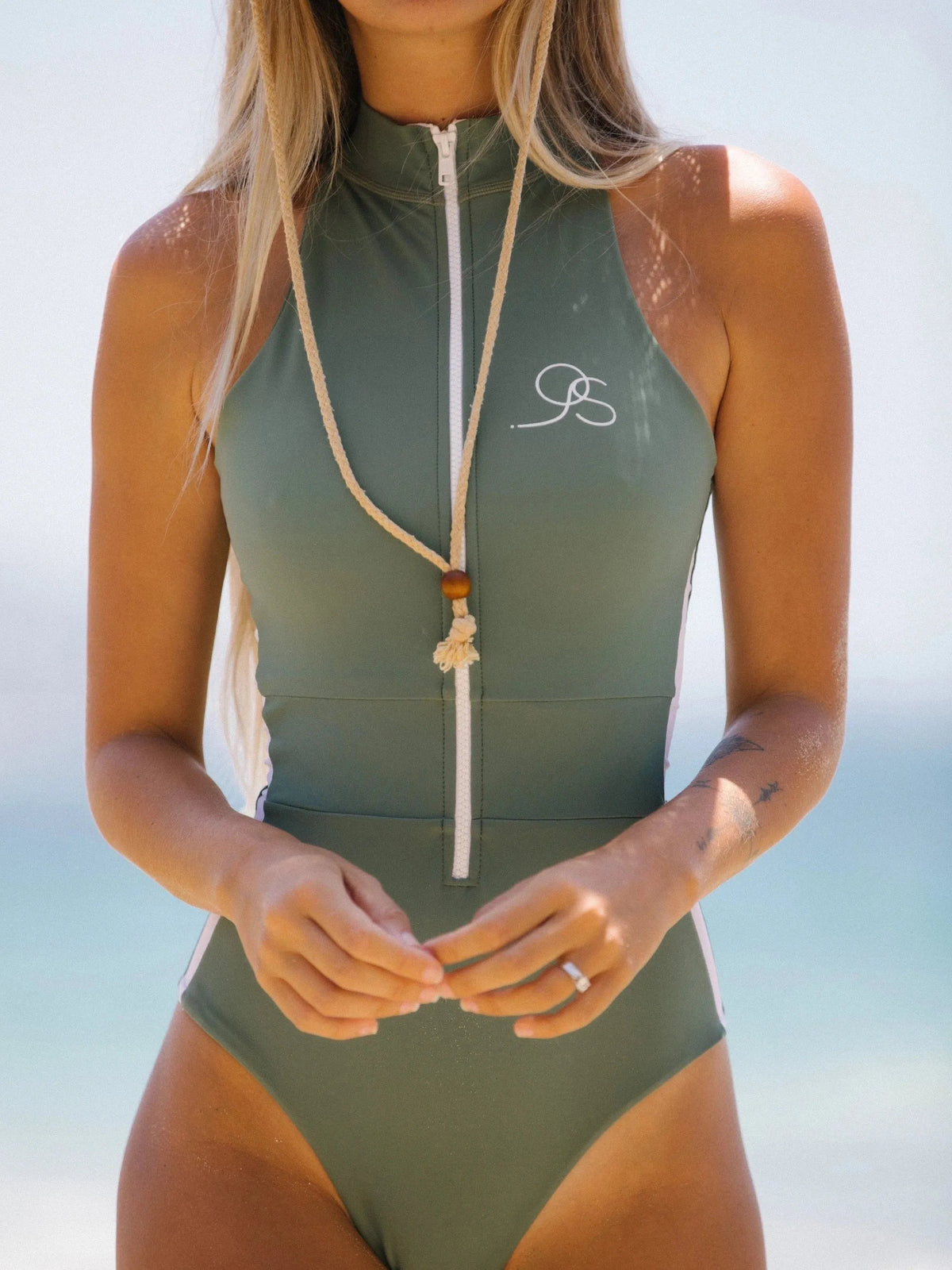
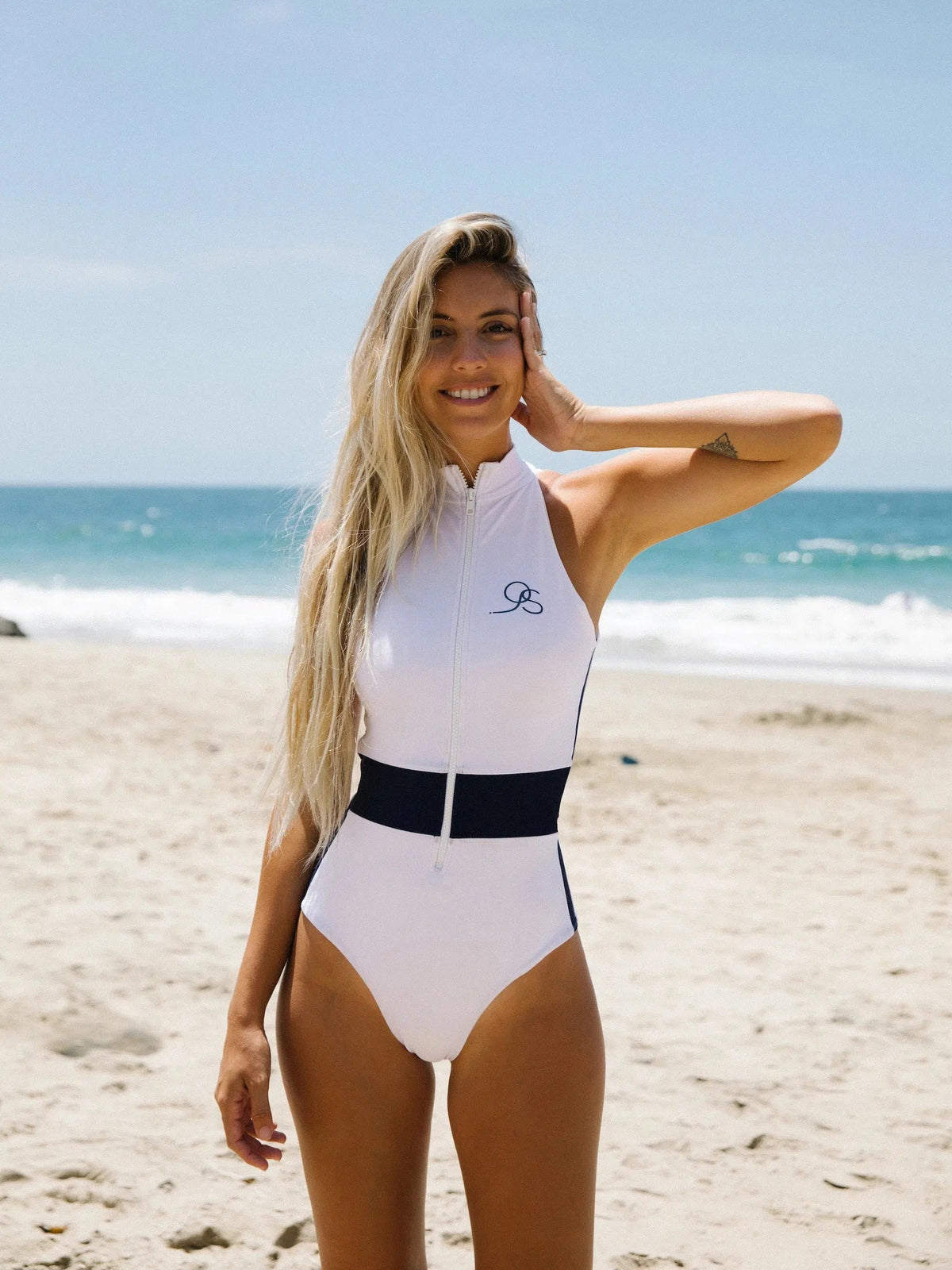
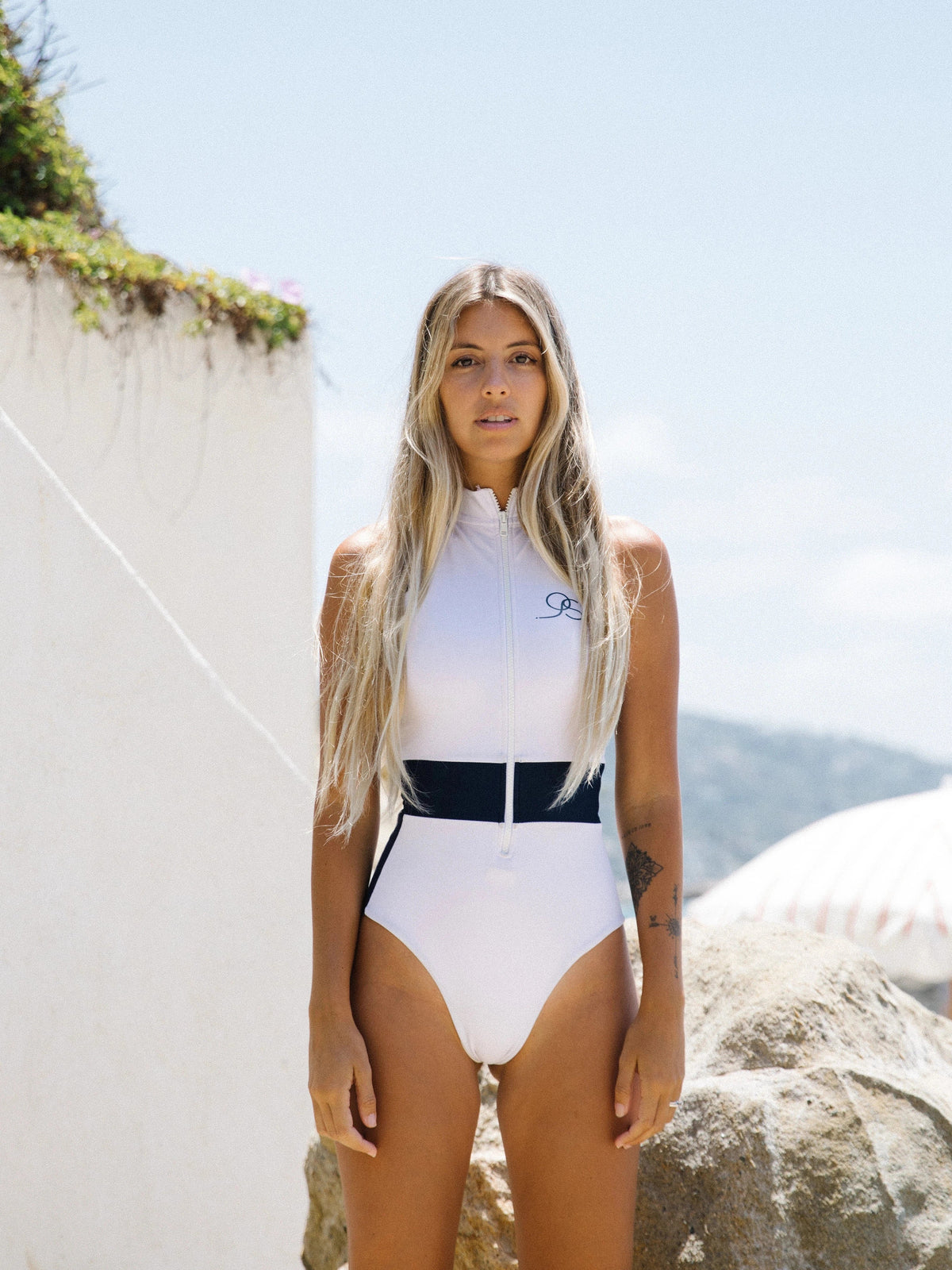
If you are after a better UVA/UVB protection, we recommend our long sleeve swimsuits and the the Sulawesi in Midnight provides stronger protection due to the darker fabric, compared to the Sulawesi in Snow.
| UPF | SPF | |
|---|---|---|
| What it rates | Fabric and clothing | Sunscreen |
| UV covered | UVA and UVB | Mainly UVB (look for “broad spectrum” for UVA) |
| Top rating | UPF 50+ | SPF 50+ in Australia |
| Wears off? | No, as long as the fabric covers you | Yes, with water, sweat and towelling |
| Reapply? | Never | At least every two hours and after swimming |
UPF stands for Ultraviolet Protection Factor. A fabric rated UPF 50+ lets through less than one fiftieth of the UV that hits it, which means it blocks at least 98 percent. In Australia, sun protective clothing is tested against a national standard, and the Australian Radiation Protection and Nuclear Safety Agency explains how the labels work on its sun protective clothing page.
The rating only covers the skin the fabric covers. That is why the cut of a garment matters as much as the number on the label. A UPF 50+ bikini still leaves your shoulders and back exposed. A long sleeve one piece covers the areas that burn first.
Sunscreen is something you have to remember. Clothing is something you just put on.
In the water, sunscreen has a hard time. It washes off when you duck dive, rubs off on your board and sweats off on a long paddle. Most of us forget to reapply, and the places we miss are usually the hardest to reach: the middle of the back, the backs of the arms, the tops of the shoulders.
A long sleeve UPF 50+ swimsuit solves most of that in one step. You put it on once, and your protection stays the same at minute one and minute one hundred and twenty. Then you use a good mineral sunscreen on the parts that are left: face, neck, ears, hands and legs.

Yes, both can. Darker and more densely knitted fabrics generally absorb more UV than pale, loose weaves. Fabric that is stretched very tight can let a little more UV through, which is one reason to choose your true size rather than sizing down. Lab-tested UPF swimwear is rated to account for real wear, so a properly fitted suit gives you the protection on the label.

The Mentawai one piece, made from Italian ECONYL with UPF 50+ protection.
$200 AUDShop the Mentawai →They do different jobs. UPF rates clothing and does not wear off. SPF rates sunscreen and must be reapplied. The best protection uses UPF clothing plus sunscreen on exposed skin.
A UPF 50+ fabric blocks at least 98 percent of UV radiation, which is the highest rating for sun protective clothing.
Not on the skin the fabric covers. Use sunscreen on exposed areas such as your face, neck, hands and legs.
Not necessarily. Only fabrics that have been tested can carry a UPF rating. Look for a rating on the label.







How tummy control swimsuits really work, which styles smooth the tummy best, how to get the fit right without the squeeze, and the suits that stay put for swimming and surf.

Gili Trawangan, Gili Air or Gili Meno? How the three Gili Islands compare for snorkelling, turtles and surf, plus how to get there, when to go and what to wear.

Long torso swimsuit guide: how to measure your torso, the signs a one piece is too short, and the strapless and two piece styles that fit a longer body.
GIFT WITH PURCHASE: a free Resort Beach Sarong with any swimsuit
Express Shipping – 2–4 Days
Free express shipping on orders over your country's minimum – see the banner at the top of the page