You've probably seen "UPF 50+" on a swimsuit tag and assumed it just meant "good sun protection" without knowing what the number was actually telling you. Fair enough - it's not exactly explained on the label. But if you're choosing swimwear for long days in strong sun, whether that's a Bali beach trip, an Australian summer, or just a weekend where you know you'll be in and out of the water for hours, understanding what UPF 50+ actually measures helps you know what you're getting, and what it can't do.
In this article:
What UPF Actually Measures
UPF stands for Ultraviolet Protection Factor. It measures how much UV radiation - both UVA and UVB - passes through a fabric to reach your skin. A UPF 50+ rating means the fabric blocks about 98% of UV rays, letting through only 1/50th of what would hit unprotected skin. That's the highest rating fabric testing recognises; there's no UPF 100 to chase.
What determines a fabric's UPF rating: the weave (tighter weaves block more), the fibre type, the colour (darker and brighter colours generally absorb more UV than pale ones), and any added treatment. It's tested in a lab, not just assumed from "it's a swimsuit so it must protect you" - which is why some swimwear offers real UPF 50+ protection and other swimwear offers close to none.

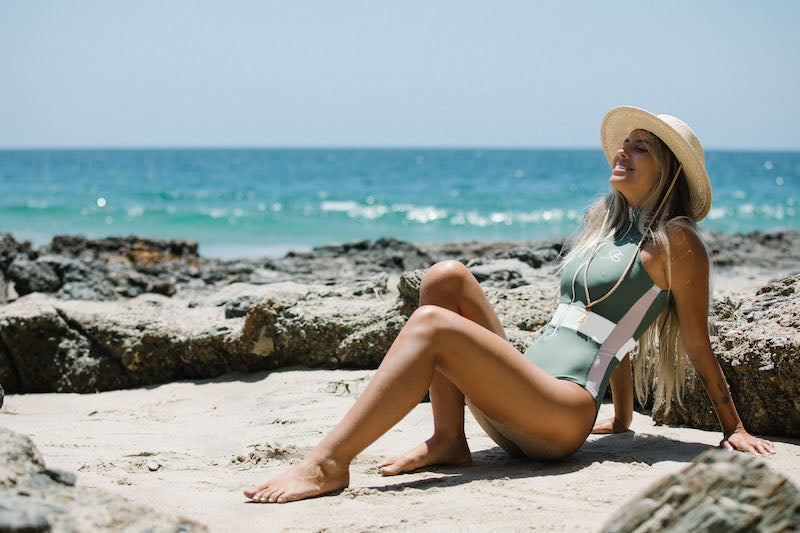
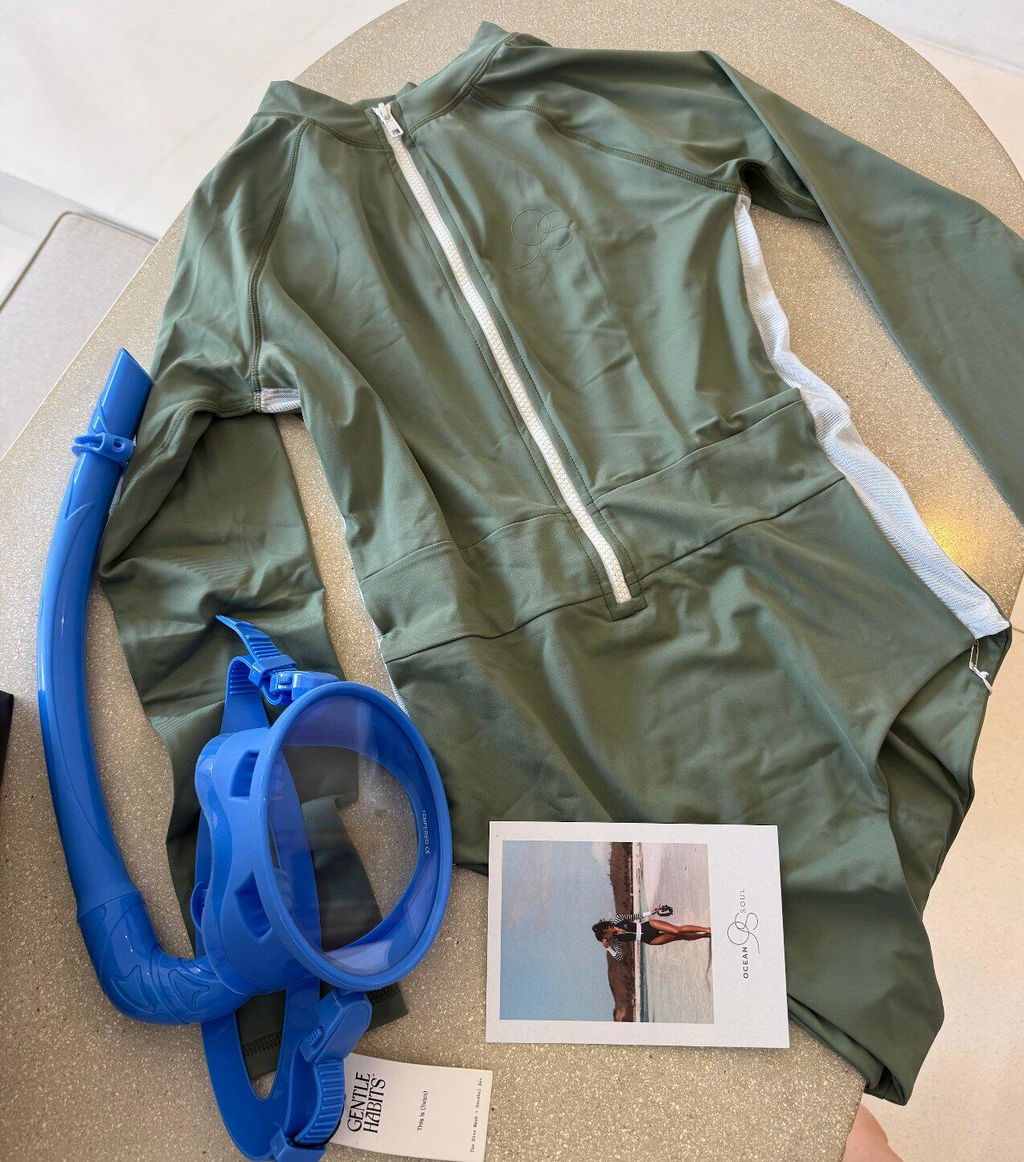
Long Sleeve Swimsuit - Sulawesi Nautical (Best Seller)
UPF 50+ fabric with the most coverage of any style in the range - arms, torso and legs included.
$230.00 AUD
Shop the Sulawesi Nautical →
UPF vs SPF: Not the Same Thing
These two get mixed up constantly, but they measure different things. SPF (Sun Protection Factor) rates how well a sunscreen protects against UVB rays specifically, and that protection depends heavily on how much you apply, how evenly, and how often you reapply. UPF rates how much UV radiation passes through a fabric, full stop - no application technique involved.
The practical difference: a UPF 50+ rash guard protects at that level from the moment you put it on until you take it off. A sunscreen labelled SPF 50 starts losing effectiveness the moment you get in the water, and most people don't reapply nearly as often or as generously as they should.
Why UPF Fabric Doesn't Wear Off Like Sunscreen
This is the real practical advantage for anyone spending hours in and out of the water - swimming laps, chasing kids through the shallows, snorkelling a reef for an afternoon. Sunscreen needs reapplying roughly every two hours, more often if you're towelling off or sweating, and most of us don't do it as consistently as we should. UPF fabric doesn't rub off on a towel, doesn't sweat away, and doesn't need topping up. It's doing the same job at hour four as it was at the start.
Best for: anyone who wants to stop thinking about reapplication and just get on with the day - the areas the fabric covers are handled for as long as you're wearing it.

Long Sleeve Rash Guard - The Serangan
UPF 50+ protection you can leave on all day, over whatever swimwear you're already wearing.
$90.00 AUD
Shop the Serangan Rash Guard →
What to Look for Beyond the UPF Number
Here's the part the label doesn't tell you: UPF 50+ only protects the skin the fabric actually covers. A UPF 50+ bikini top protects your torso brilliantly and does nothing for your shoulders, arms or legs. So the number matters less on its own than it does paired with actual coverage - which is why a long sleeve UPF 50+ swimsuit protects far more skin over a full beach day than a UPF 50+ bikini, even though the fabric rating is identical.
Worth checking on top of the UPF number:
-
Coverage - how much of your body the garment actually protects, not just the rating on what it does cover
-
Fit - fabric that's stretched too tight can lose some of its rated protection, so a well-fitted piece matters as much as the label
-
The accessories you're not thinking about - face, scalp and the tops of ears rarely get covered by swimwear at all, which is where something like a wide-brimmed visor fills the gap

Wide-Brimmed Bamboo Sun Visor
Covers the face and scalp that swimwear can't reach - the gap most UPF conversations skip.
Shop the Bamboo Visor →
Want the full run-down on which style gives you the most coverage for your day? Read Rash Guard vs. Long Sleeve Swimsuit vs. Crop Rashguard.
Frequently Asked Questions
What does UPF 50+ actually mean?
UPF stands for Ultraviolet Protection Factor. UPF 50+ means the fabric blocks about 98% of UVA and UVB rays, letting through only 1/50th of the UV radiation that would otherwise reach your skin.
Is UPF the same as SPF?
No. SPF measures how well a sunscreen protects against UVB rays specifically and depends on how it's applied. UPF measures how much UV radiation (both UVA and UVB) passes through a fabric, and it doesn't rub off, sweat off, or wash out the way sunscreen can.
Does UPF fabric wear out over time?
Quality UPF fabric holds its rating for the life of the garment under normal wear and rinsing. Stretching the fabric out of shape, heavy chlorine exposure, or years of sun-bleaching can gradually reduce protection, so it's worth checking your swimwear for thinning or fading over time.
Do I still need sunscreen if I'm wearing UPF 50+ swimwear?
Yes, on any skin the fabric doesn't cover - face, hands, feet, neck. UPF clothing and sunscreen work together rather than replacing each other; the fabric handles the areas sunscreen would otherwise need constant reapplying on.
Is UPF 50+ enough for really strong sun, like in Bali or Australia?
UPF 50+ is the highest rating fabric testing recognises, so there's no higher number to look for. What matters more in intense equatorial or Australian summer sun is coverage - how much of your body the garment actually covers - since UPF only protects the skin underneath it.
The Bottom Line
UPF 50+ means a fabric is blocking about 98% of UV radiation from reaching whatever skin it covers, reliably, without reapplying. The number itself is simple - it's coverage that does the rest of the work, which is why a long sleeve UPF 50+ piece protects so much more of a long beach day than a UPF 50+ bikini ever could.
See the full UPF 50+ range built for long days in strong sun.
Shop UPF 50+ Swimwear