The best Uluwatu beaches for swimming and surf: Padang Padang, Bingin, Suluban, Dreamland, Melasti, Green Bowl, Thomas and Nyang Nyang, with stairs, tides, the best season and what to wear.

Why Choose Eco-Friendly Protection
As the sun's rays beckon you to the beach, it's crucial to think beyond just sun protection for your skin. You should also consider the health of our oceans and coral reefs. That's where reef-safe sunscreen and zinc oxide come into play.

The Problem with Conventional Sunscreen:
Many popular sunscreens on the market contain harmful chemicals, such as oxybenzone and octinoxate, which have been linked to coral bleaching and damage to marine ecosystems. When we swim or snorkel with these sunscreens on, the chemicals can leach into the water, posing a severe threat to marine life and coral reefs.
Why Choose Reef-Safe Zinc Sunscreen:
Protecting Coral Reefs: Reef-safe zinc sunscreens are formulated without harmful chemicals that have been shown to harm coral reefs. By choosing these sunscreens, you're contributing to the preservation of these vital marine ecosystems.
Safer for Marine Life: Beyond coral reefs, marine life can also be adversely affected by chemical-laden sunscreens. Using reef-safe alternatives helps protect fish, sea turtles, and other ocean creatures from exposure to harmful substances.
Gentler on Your Skin: Reef-safe zinc sunscreens are typically made with natural, mineral-based ingredients like zinc oxide and titanium dioxide. These ingredients provide effective sun protection without the potential irritations associated with chemical sunscreens.
Effective Sun Protection: Reef-safe sunscreens offer broad-spectrum protection against UVA and UVB rays, ensuring that you stay safe in the sun without harming the environment.

The Power of Zinc Oxide:
One of the key ingredients found in many reef-safe sunscreens is zinc oxide. This natural mineral forms a protective barrier on your skin's surface, reflecting and scattering harmful UV rays away from your skin. Here's why zinc oxide is a standout choice:
Broad-Spectrum Protection: Zinc oxide provides excellent protection against both UVA and UVB rays, making it a highly effective sunscreen ingredient.
Gentle on Sensitive Skin: Zinc oxide is ideal for those with sensitive or allergy-prone skin, as it rarely causes skin irritation.
Eco-Friendly: Zinc oxide is biodegradable and does not harm marine life or coral reefs, making it a responsible choice for sun protection.
Long-Lasting: It offers long-lasting protection, reducing the need for frequent reapplication.
Choosing reef-safe zinc sunscreen and products containing zinc oxide isn't just about safeguarding your skin; it's about making a positive impact on the environment. By opting for these eco-friendly options, you're taking a step towards preserving our oceans, coral reefs, and marine life while enjoying the sun safely. So, the next time you head to the beach or embark on a snorkelling adventure, remember the power of reef-safe sunscreen and zinc - a responsible choice for you and the planet.
Here is something many brands will not tell you: “reef safe” is not a regulated term. There is no single global standard that a sunscreen has to pass before it can print those words on the bottle. So it helps to know what to look for yourself.
In practice, most people use “reef safe” to mean a sunscreen that leaves out ingredients linked to coral harm, especially oxybenzone and octinoxate. Hawaii banned the sale of sunscreens containing those two chemicals from 2021, and the Pacific nation of Palau went further, restricting a longer list. Mineral sunscreens based on zinc oxide are widely seen as the gentler choice, particularly in formulas that use non-nano zinc.
The most reef friendly sunscreen is the one you do not need, because your swimsuit is already covering you.

The biggest thing you can do for the reef is reduce how much sunscreen goes into the water in the first place. That is where UPF swimwear comes in. A long sleeve UPF 50+ swimsuit covers your shoulders, back, chest and arms, which is most of the skin you would otherwise slather in cream. That leaves only your face, neck, hands and legs.
On a snorkel trip, that difference is huge. Instead of a whole body coated in lotion floating over the coral for an hour, you have a little zinc on your face and the backs of your hands.

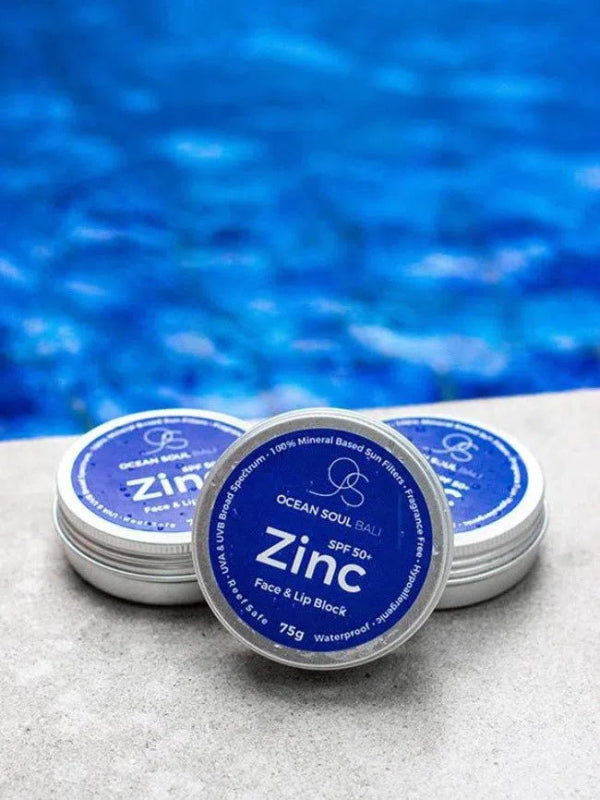
A mineral zinc sunscreen SPF 50+. Easy to see, easy to reapply and kinder to the reef.
$20 AUDShop the zinc →
A UPF 50+ long sleeve one piece for snorkelling, surfing and long days in the sun.
$230 AUDShop the Sulawesi →There is no official definition, but it usually means a sunscreen without oxybenzone and octinoxate. Mineral sunscreens based on zinc oxide are commonly recommended.
Zinc oxide is widely considered a gentler option for marine life than chemical filters such as oxybenzone. Using less sunscreen overall, by wearing UPF clothing, helps even more.
Only on the skin the swimsuit does not cover, such as your face, neck, hands and legs.
Love this? Read more about helping our planet.













The best Uluwatu beaches for swimming and surf: Padang Padang, Bingin, Suluban, Dreamland, Melasti, Green Bowl, Thomas and Nyang Nyang, with stairs, tides, the best season and what to wear.

How to choose a rash guard: crop, full length or long sleeve swimsuit, how it should fit, why UPF 50+ and full sleeves matter, what to wear with it and how to care for it.

The best beaches in Bali by activity: calm swimming at Sanur and Nusa Dua, snorkelling at the Blue Lagoon, Amed and Menjangan, beginner surf at Kuta and Canggu, and the Bukit for experienced surfers.
GIFT WITH PURCHASE: a free Resort Beach Sarong with any swimsuit
Express Shipping – 2–4 Days
Free express shipping on orders over your country's minimum – see the banner at the top of the page